
A true restructuring would require dominant players to deliberately overhaul global institutions and replace them, and that has not happened. Instead, new players such as India, China, Indonesia and Vietnam, new bodies such as BRICS and the Shanghai Cooperation Organisation, an emerging Eurasia bloc and new trade routes are contesting a system that is no longer fully trusted. Older institutions such as the WTO and OPEC still exist but appear less relevant to today’s challenges.
Cost-of-living and electoral pressures push governments toward short-term choices, as seen in Nigeria’s subsidy removal and its partial reversal ahead of elections. In Europe, protests in France, Serbia and Spain, debt of 60 percent to 120 percent of GDP and migration tensions have fuelled the rise of right-wing parties. Governments are caught between raising spending, cutting it or borrowing more, and energy remains a constant source of pressure.
Losing Russian pipeline gas has raised energy costs, pushed some firms to relocate and deepened the cost-of-living crisis. Europe trails the United States and China in productive capacity, depends on U.S. satellite technology such as Starlink, and faces unresolved security tensions among the EU, NATO and Russia. Weak government popularity, the rise of a Eurasia bloc and new Arctic trade routes add to its vulnerability.
African countries trade little among themselves, still face visa and border barriers, and lack the reliable power and labour quality needed to become manufacturing hubs. That limits their leverage in negotiations with the United States, China and the EU. The way forward is to use frameworks such as AfCFTA, ECOWAS and SADC, to treat subsidy as a strategic tool for agriculture and manufacturing rather than removing and reinstating it around elections, and to be ready for uncomfortable policy truths in 2027.
Watch Previous Episodes Here
What Will Shape the Global Economy in 2027, and Where Does Africa Stand?
The global political and economic landscape is evolving, with emerging powers challenging established relationships, geopolitical tensions influencing trade and energy markets, and domestic pressures shaping government decisions. As 2027 approaches, understanding these shifts requires looking beyond economic indicators to the political and institutional forces driving them.
In this episode of the Kingsgate Brief, we examine the changing global order and its implications for governments, businesses and economies, particularly across Africa.
The conversation explores:
The emergence of new economic powers, institutions and trade relationships.
How domestic political pressures and electoral considerations shape economic policy.
The implications of US political developments for foreign policy and global economic relations.
The role of energy security and industrial competitiveness in Europe’s economic outlook.
How Africa can strengthen regional integration, expand productive capacity and improve its position in global economic negotiations.
From Global Uncertainty to Africa’s Strategic Position
For Africa, navigating these changes requires more than responding to shifting global power relations. It means strengthening productive capacity, deepening intra-African trade and building the economic leverage to negotiate from a stronger position.
🎧 Watch the new episode of Kingsgate Brief, featuring Dr Usman Alabi, Senior Fellow at Kingsgate Advisors Institute and researcher at the University of Warwick, in conversation with Dr Oluwanbepelumi Olanubi, Executive Director of the Institute.
Listen, learn and subscribe for more conversations on economic intelligence, public policy and development.
EPISODE SUMMARY: The discussion examined whether the global political and economic order is being restructured or merely contested, and what that means for Africa in 2027. It explained that what the world is seeing is not yet a restructuring, but the arrival of new players, new institutions and new trade routes, from BRICS and the Shanghai Cooperation Organisation to an emerging Eurasia bloc, alongside weakening trust in existing global bodies. The conversation moved across how domestic political pressures, from subsidy reversals in Nigeria to cost-of-living protests and the rise of right-wing parties in Europe, shape economic policy ahead of elections, and why the recent U.S. midterm results change the balance of power in Congress but are likely to change little in America’s foreign policy. It stressed energy as the central pressure point for Europe, the vulnerability of European competitiveness against the United States and China, and why Africa’s relationship with major powers remains unequal while its economies stay primary producers that trade little among themselves. It also explored how different forms of integration are replacing the old universal model, and closed with the view that Africa must build regional integration, a manufacturing base and a more sensible approach to instruments such as subsidy, and be ready for uncomfortable truths in policymaking in 2027.
[Dr. Oluwanbepelumi Olanubi]
Hello, everyone, and welcome to another insightful episode of the Kingsgate Brief, the official podCast series presented by Kingsgate Advisors Institute. Based on what we have been doing over the past months, this is another exciting conversation that I am bringing to you today. We believe that evidence should not be locked away in drawers, in textbooks, or in research papers. We believe we should bring evidence to the fore, demystify some of the things we do not understand, and help people make sense of macroeconomic and political trends so that we can make better, more important decisions.
Today I’m hosting this conversation, and I am Dr Oluwanbepelumi Olanubi, the Executive Director of Kingsgate Advisors Institute. If you have not already, I want to invite you to subscribe to our social media pages. We are on LinkedIn, and we are also on Instagram and on X as Kingsgate Advisors Institute. Also subscribe to our YouTube channel, where we upload new episodes of this podcast and conversation. Please follow us, engage with us, and we would like to hear from you too. You can also visit our website to see what we are doing.
We recently launched one of our flagship products, called The NAVIGATOR. The NAVIGATOR is live. You can visit our website to see what it means and how you can use it to improve what you do in your institution. We still have the promo code running until the end of the month, so you want to take advantage of that, save yourself some money, and use the resources we have made available. Thank you for doing that.
Today’s conversation is going to center on how to position yourself not just as an individual but as an economist looking at 2027 and how the political landscape will shape economic outcomes. We have been joined by one of our senior research fellows to talk about what 2027 will look like, given the global political landscape. As we approach 2027, the global political and economic landscape presents a rather interesting picture. On the one hand, the global economy has demonstrated considerable resilience. On the other hand, the political and institutional foundations shaping economic relationships are being tested in ways that deserve serious attention. In the United States, for instance, the recent midterm elections have brought renewed attention to the balance of political power and what it could mean for economic policy, trade relationships, and international engagement. Across Europe, governments are confronting difficult questions on economic competitiveness, security, energy, migration, and political legitimacy.
The relationship between China and the United States continues to influence trade, technology, industrial policy, and the strategic choices of other economies in the region. For Africa, these developments are not distant international affairs. They have serious implications for our trade, our investment, our development financing, sovereign debt, commodity markets, and the political choices our leaders have to make. What makes this particularly interesting is that we cannot understand these developments through an economic lens alone.
Political interests, institutional incentives, domestic pressures, geopolitical rivalries, and competing national priorities all come together to shape how economic decisions are made, and sometimes what appears to be economically desirable may be politically difficult to implement or achieve. So, the important question is this: are we witnessing a fundamental change in the global political and economic order? How might the recent U.S. midterm elections influence economic outcomes in 2027? Are emerging economies positioning themselves to leverage the advantages that come with this kind of repositioning? What does the growing tension between major powers mean for global financial stability? These are the questions we are going to be exploring under the topic “The World in 2027: Geopolitics, Economic Power and the Uncertainties Ahead,” and we are joined today by Dr. Usman Alabi, a senior research fellow at Kingsgate Advisors Institute, to unpack all of these.
Dr. Alabi is a passionate crusader for social change and a social reformist who believes in the need for disruptive methodologies to address the current social and economic conditions in sub-Saharan Africa. He received broad training in global politics and comparative political economy during his undergraduate and postgraduate studies at the University of Lagos. His interest in, and dedication to, understanding the political economy of African states, their fragility, and the context of their conflicts started at the university. He earned his PhD from the University of Warwick, and his research focused on the everyday political economy of counterterrorism. Dr. Alabi brings expertise in comparative political economy, governance, political institutions, conflict, and development. His perspective is particularly valuable because understanding the global economy requires us to look beyond economic indicators and also examine the political forces and institutional realities shaping outcomes.
Today, we take the conversation to the global space, and we are glad to have you join us. Thank you.
[Dr. Usman Alabi]
Thank you too. It is a pleasure to be on board.
[Dr. Oluwanbepelumi Olanubi]
All right, we are going to start from a very interesting note today. I want us to start by looking at what 2027 could look like. As we look towards 2027, we are witnessing a fundamental restructuring of the global political and economic order. So, the question is, are we seeing adjustments within a system that remains largely intact, or are we already seeing disruptions that are affecting the system that we have known?
[Dr. Usman Alabi]
Thank you so much for that question. The thing is, it is difficult for us to say that we are seeing a restructuring, because a restructuring would mean a complete overhaul of the existing system. It would mean a deliberate intention by the dominant players to overhaul the institutions of economic decision making that we have now, and that deliberate intention would come with new policies, and new structures to address the current situation. So, it is difficult to say that what we are having is a restructuring.
What we have is a situation where we are beginning to see new players in the economic system and in global economic relations. Before now, we had the dominance of a particular region of the world. We talk about the global North, the southern periphery, the global South, and so on. Economic prosperity and economic decision-making had always come from the part of the world we consider the global North, and most times geo-economic decisions were determined by that part of the world. It is even reflected in global institutions and international systems.
In recent times, we are beginning to see a dent in that system. The existing structure can no longer cater for the current chaos that the world has begun to experience in the past two or three years. We have not gotten to the point of restructuring yet, but we are beginning to see new players, new institutions, certain global bodies, and even other countries coming to the table to debate and contest the current situation and institutions. For example, you see the emergence of new countries in Asia. You see the emergence of another economic bloc, like Eurasia. You see the emergence of new countries in terms of technological emancipation and trade links. You see countries like India coming up, and countries like China beginning to have a say in global trade relations. You see countries like Indonesia and even Vietnam coming up, especially in terms of forward and backward linkages in production. We would not say they are merely emerging; they are beginning to establish themselves.
Beyond the usual trade routes that we know, we are beginning to see new trade routes coming up. We are also beginning to see new institutions. You now have the BRICS cooperation, and they are talking about coming up with their own global financial payment system, and about how to, not completely reform, but find a way to ensure that the current global financial system caters to every part of the world. So, we would not say restructuring, because restructuring would mean that the current institutions are no longer in force, or that we have come to a situation where we agree they are no longer functional. But we can say that we are getting there. We now have new emerging bodies, new institutions, and new global players in different parts of the world shaping global economic relations.
It is no longer a conversation where you produce an iPhone in Indonesia, or a car in South America, and then have the headquarters in North America. These countries and institutions are now seeing their relevance in international economic relations. They are beginning to question the system, and they are now using negotiation as a means in the global economic system. That is where we are at the moment, and it is not going to stop. We hear about BRICS. We hear about the Shanghai Cooperation Organisation. New bodies could come up, even here in sub-Saharan Africa itself. New trade links could emerge, new institutions could form, and countries could become subjects of contestation in global cooperation. So, that is the state we are in. The existing structure has not entirely collapsed, but it is not completely trusted anymore, and countries are beginning to come up with their own global bodies.
Guest

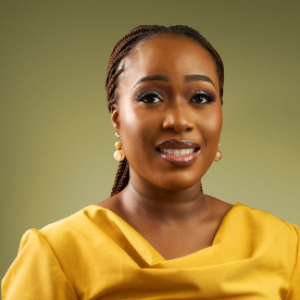
Executive Director, Kingsgate Advisors Institute

Senior Research Fellow, Kingsgate Advisors Institute